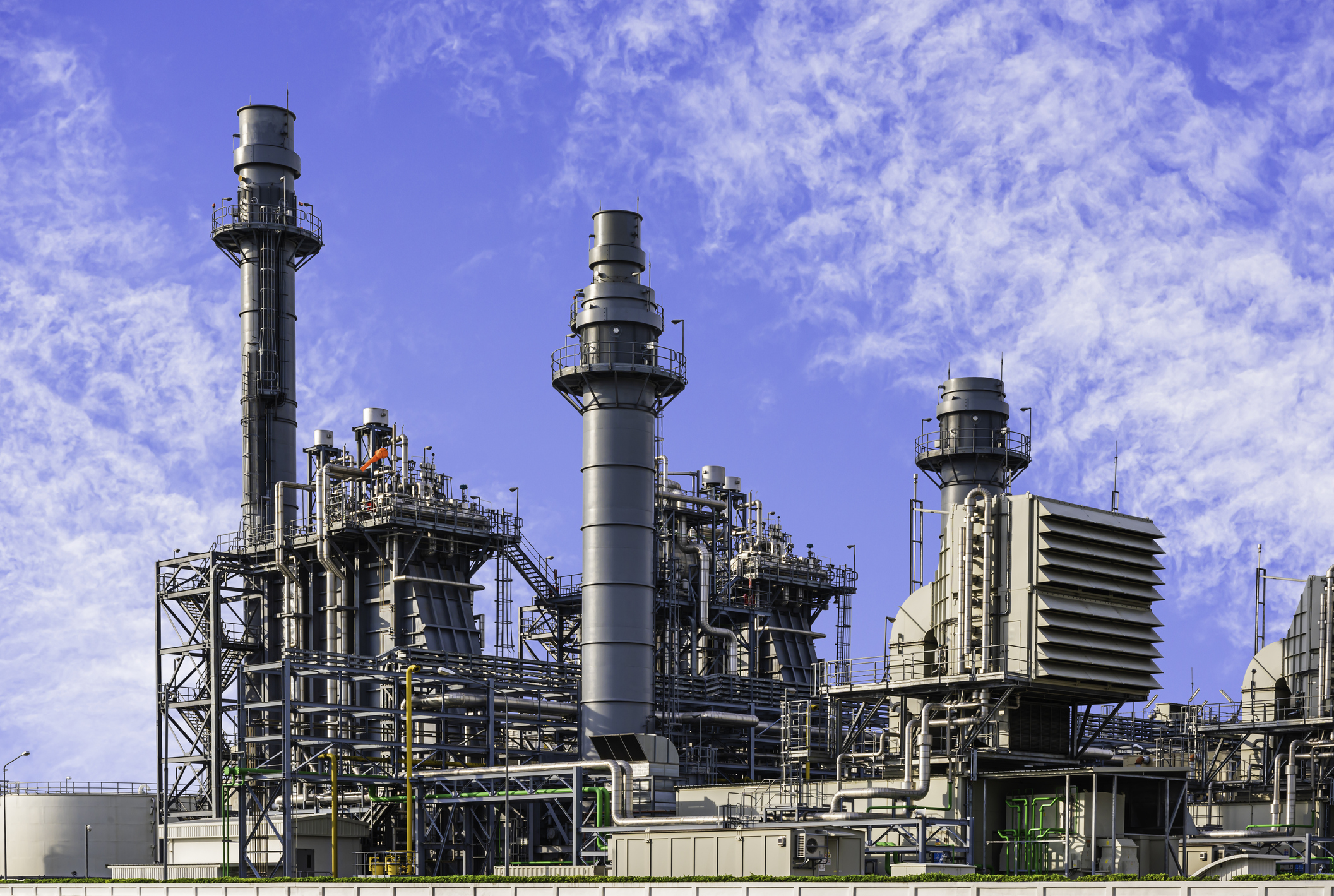
Data center power is now a foundational pillar of the global digital economy, enabling the uninterrupted flow of commerce, communications, and critical services. With electricity consumption already comparable to that of entire nations and demand from digital technologies projected to double by 2030, power strategy has become a board-level consideration.
In this environment, even brief outages carry significant financial, reputational, and regulatory consequences. Executives must therefore ensure their facilities have robust, resilient power architectures — spanning utility feeds, on-site generation, and advanced energy storage — to maintain continuous operations. Reliable power is no longer a technical detail; it’s a strategic requirement that directly influences business continuity, customer trust, and long-term competitiveness.
Understanding Data Center Power
Data centers are among the largest concentrated electrical loads on the grid, drawing continuous high-density power and increasingly supplementing utility service with on-site generation and renewable resources. Rising compute requirements — especially from AI, GPU clusters, and other high-density workloads — are driving higher rack power densities and greater dependency on robust standby power systems such as diesel or natural-gas generators, rotary UPS, and static UPS topologies to ensure uninterrupted operation.
Most facilities still receive bulk power via the utility’s three-phase medium-voltage distribution system, typically in the 13.2 kV to 115 kV range (or higher for hyperscale campuses). Inside the facility, step-down transformers feed switchboards, uninterruptible power supply (UPS), and power distribution units (PDUs), delivering conditioned power to IT loads. To improve power quality and system resilience, many data center operators deploy on-site distributed energy resources (DERs), including battery-based energy storage systems (BESS), fuel cells, and solar PV. These systems help mitigate voltage disturbances, reduce exposure to peak pricing, and support sustainability commitments.
As computational demand grows, capacity planning increasingly centers on electrical load profiles, harmonic distortion, transformer loading, and fault-current availability. Facilities must be designed for rapid load scaling, with power densities exceeding 50–100 kW per rack in many AI deployments. This intensifies requirements for properly sized conductors, selective coordination studies, and thermal management of electrical infrastructure and integration with liquid cooling loops.
To protect uptime, critical power paths rely on redundant UPS modules, automatic transfer switches (ATS), and generator sets configured in N, N+1, 2N, or distributed redundant topologies. These systems provide instantaneous ride-through during utility disturbances, stabilize voltage and frequency, and maintain critical loads until long-duration power sources are fully online. Without these layers of protection, even transient events — such as voltage sags, frequency deviations, or switching surges — could lead to data corruption, equipment stress, or cascading failures.
Data centers also have growing significance within the broader power ecosystem. Their large, predictable loads make them ideal participants in utility demand-response, load-shaping, and ancillary-services markets. In advanced deployments, microgrids enable islanding during grid disturbances, while intelligent load-shifting strategies can modulate non-critical IT or mechanical loads to support grid stability. Some operators participate in federal pilot programs that treat data centers as flexible grid assets capable of curtailing load or shifting to on-site generation.
By partnering with engineering firms specializing in power system modeling, protection coordination, and integrated electrical design, operators can transform power infrastructure from a risk factor into a competitive differentiator. A comprehensive approach — spanning load-flow analysis, arc-flash studies, selective coordination, redundancy planning, and DER integration — strengthens reliability and ensures the facility remains resilient under both normal and fault conditions.
How Data Center Power Is Delivered and Protected
Electricity follows a structured path before reaching IT equipment. High-voltage generation sources — such as gas turbines, nuclear power, wind farms, and utility-scale solar — deliver power to the transmission grid, where it is stepped down through substations and routed to a facility’s medium-voltage switchgear. Inside the data center, transformers further reduce voltage, switchboards distribute power to mechanical systems, and PDUs supply overhead busway systems and branch circuits that feed individual racks. Throughout this process, conductors, breakers, and busways form an integrated distribution network.
Once on-site, the power must be protected at every stage. Redundant utility feeds, dual transformers, parallel switchgear, and diverse cable paths ensure continuous delivery even during maintenance or equipment failures. UPS systems, supported by diesel or natural-gas generators or emerging fuel-cell technologies, provide ride-through capability from seconds to days, while automatic transfer switches manage seamless transitions between sources. Many facilities now utilize grid-interactive UPS systems or dedicated BESS to reduce electricity demand peaks, lower operating costs, and support renewable-energy integration.
To translate architecture into uptime, most operators adopt standardized redundancy models:
- N: Baseline capacity with no spare components.
- N+1: One extra component to survive a single failure.
- 2N: A full, mirrored system for fault tolerance.
- Distributed redundant: e.g., 3N/2 or 4N/3 block redundant, where load is shared across multiple power trains.
Escalating from N to 2N+1 redundancy allows enterprises to maintain full load even during simultaneous failures, supporting the fault-tolerant requirements of Tier 4 facilities and the stringent reliability standards of regulated industries.
Effective power distribution requires more than adequate data center capacity; it requires directing power where it is most needed. Because IT equipment, cooling systems, lighting, and security infrastructure draw from the same supply, properly segmenting IT loads from mechanical (cooling) loads, sizing conductors for continuous load and voltage drop, and applying load-shedding controls ensures essential systems remain prioritized during an outage.
The current type also plays an important role. Alternating current remains standard for long-distance transmission and most facility equipment, while direct current — created via rectification at the rack or row level — reduces conversion losses for high-efficiency compute environments. Three-phase power is preferred in large data halls for its higher power delivery capacity per conductor and phase balance.
All these design choices support a single objective: uninterrupted operations. Achieving this requires more than hardware; it demands an engineering partner capable of integrating generation studies, protection coordination, arc-flash analysis, data center infrastructure management (DCIM) assessments, and construction support into a unified power strategy that strengthens every link in the data center’s electrical infrastructure.
Measuring Data Center Power
Understanding exactly how much electricity a facility uses — and how efficiently that energy supports IT operations — is essential for both cost management and sustainability. Real-time insight into energy consumption, power usage, and overall energy efficiency is now a baseline requirement in an environment shaped by tightening regulations and rising stakeholder expectations.
Facility teams typically monitor three key areas:
Power Usage Effectiveness (PUE)
PUE, calculated as total facility power divided by IT power, indicates how efficiently energy is used. While a perfect score of 1.0 is theoretical, leading data centers achieve values below 1.2 by optimizing environmental controls, reducing conversion losses.
Capacity vs. Load
Design capacity sets the maximum output of the electrical infrastructure, while real-time load reflects what is currently being used. Tracking both within a data center infrastructure management platform enables proactive scaling, operational alignment with grid conditions, and reduced unnecessary energy consumption.
Complementary Metrics
Additional measurements — including data center infrastructure efficiency (DCIE), carbon usage effectiveness (CUE), and water usage effectiveness — provide deeper insight into how energy sourcing, cooling strategies, and renewable integration affect sustainability goals.
Together, these metrics turn raw electrical data into actionable intelligence and deliver the transparency increasingly required by regulators, investors, and customers.
FAQs About Data Center Power
What Is Data Center Power?
Data center power includes all systems that generate, route, condition, and manage electricity to ensure servers, storage, and cooling equipment receive the required voltage and current.
How Does Power Reach IT Equipment?
Utility power enters through medium-voltage switchgear, is stepped down by transformers, routed through switchboards, UPS systems, and static transfer switches (STS), and then distributed to racks via PDUs and remote power panels.
Why Is Redundant Power Necessary?
Redundancy prevents outages from disrupting operations. Dual feeds, UPS systems, and generators ensure workloads remain online even if a single component fails.
What Consumes Power in a Data Center?
Most energy supports IT equipment, such as servers, networking, and storage. Cooling systems, lighting, security, and power-conversion losses also contribute significantly to total consumption.
How Is Power Efficiency Measured?
Energy efficiency is evaluated using metrics such as PUE, DCIE, and CUE, which benchmark how effectively incoming electricity is converted into usable computing power.
What’s the Difference Between Facility Power and IT Power?
Facility power is the total electricity entering the site. IT power is the portion consumed by computing equipment, storage, and network equipment (measured at the UPS output or PDU). Their ratio is the basis for PUE.
What Does Power Density Mean?
Power density measures the kilowatts delivered per rack (Watts per square foot is largely a legacy metric). It informs cooling strategies, floor layouts, and circuit sizing for high-performance and AI-focused environments.
What Does PUE Represent?
PUE is the ratio of total facility power to IT power. Lower values (closer to 1.0) indicate more efficient power consumption for cloud computing rather than overhead functions like cooling or power conversion.
Secure Efficient Data Center Power With ENERCON
Ready to turn power into a competitive advantage? Contact ENERCON for a consultation on data center power solutions and discover how precision engineering can safeguard your uptime while advancing your sustainability, compliance, and cost-efficiency goals.