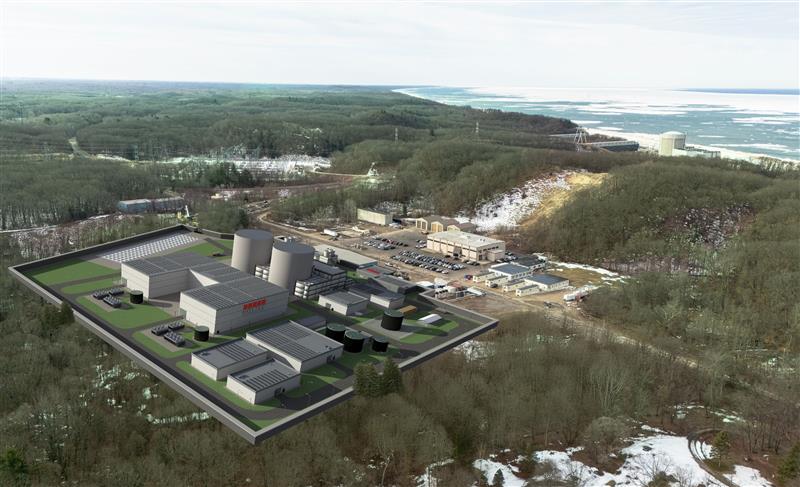
February 2026 — Holtec International has reached an exciting milestone in its effort to bring two new SMR‑300 small modular reactors — Pioneer Units 1 and 2 — to the Palisades Energy Center in Covert, Michigan. The U.S. Nuclear Regulatory Commission (NRC) has officially accepted Holtec’s initial submittal, which includes the Limited Work Authorization (LWA) and a Comprehensive Environmental Report (ER). This acceptance allows the NRC to move forward with its detailed review process. ENERCON is proud to have supported Holtec in preparation of the Construction Permit Application LWA and Comprehensive ER.
A New, More Efficient Approach to Environmental Review
One of the standout features of this submittal is the Comprehensive ER. Instead of submitting separate environmental reports for different parts of the process, this all‑in‑one ER covers both the LWA and CPA activities. It’s a first‑of‑its‑kind approach aimed at making the review process smoother and more efficient for everyone involved and will result in a comprehensive EIS that covers both licensing actions. The NRC’s acceptance of this document sets a new precedent and is a realization of the NRC and industry’s focus on increased efficiency while maintaining high quality.
Submitting the CPA in Two Parts to Move Faster
To support Holtec’s schedule for development at the Palisades Energy Center, Holtec chose to submit the Construction Permit Application in two parts. Part 1 — which the NRC just accepted — includes the LWA and the Comprehensive ER. Part 2 will follow later, with additional safety and technical details. This staggered approach will support earlier preconstruction and site construction activities when compared to one consolidated CPA, in order to keep the momentum behind the deployment of Pioneer Units 1 & 2.
Supporting the Future of Clean Energy at Palisades
The new SMR‑300 units will be located next to the Palisades Nuclear Plant, which Holtec is in the process of bringing back online. The NRC acceptance of the LWA will allow the completion of early site activities such as soil preparation, backfilling, and foundation work — important steps that help keep the project on track to begin operations in the early 2030s.